Popping The Bonnet on AI (Part 3 in Series)
In Part 1 of this series, we used the analogy of vehicles to make sense of the AI landscape. Engines, vehicles, and the brand-name confusion that comes with both. In Part 2, we got into the business realities of running AI as a capability: fuel costs, data, security, the supply chain that connects everything, and the roads that decide whether anything actually moves.
Even with the best fleet on the smoothest roads, AI delivers wildly different value in different organisations. The reason isn’t the engines, the vehicles, or the platforms. It’s the people behind the wheel.
But there’s another twist. The cars are starting to drive themselves. Agentic AI is changing what it means to be a driver, and forcing every business to rethink the rules of the road. So this final piece looks at three things: the human driver, the rise of driverless AI, and the AI governance that keeps the whole network from descending into a demolition derby.
The Driver: You
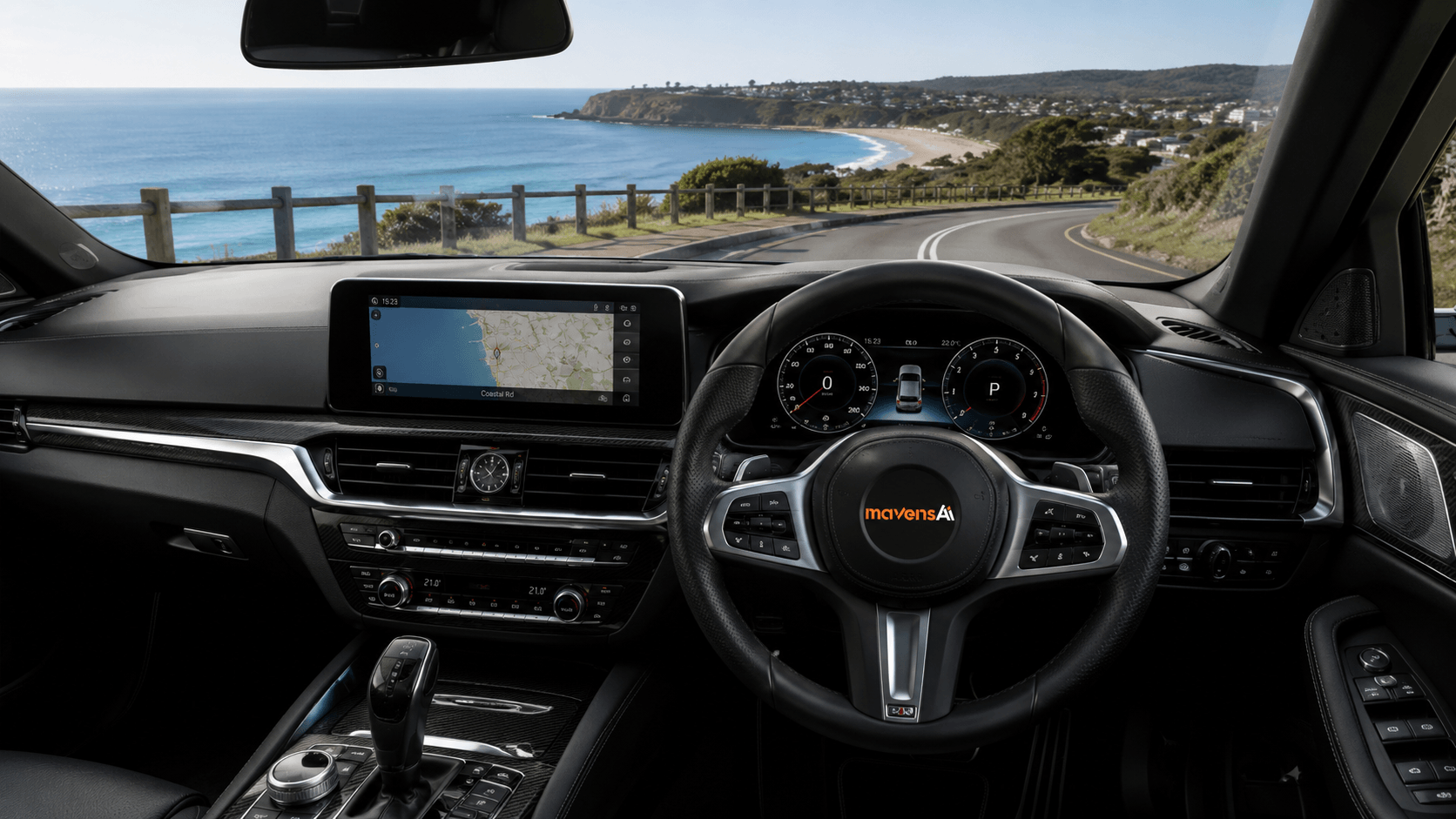
Even with the best engine, the right vehicle, full tanks of fuel, well-handled cargo, and a smooth road network, one factor outranks them all: the driver.
A Ferrari is wasted on a learner. Too complex, too much power. The same AI tool, in different hands, produces wildly different results. One person uses Claude to write an average email. Another uses it to draft a strategic brief, stress-test their reasoning, find the holes in their own argument, and rewrite it three times before lunch. Same vehicle. Different driver.

Clear instructions, sharp judgement, and an understanding of the vehicle’s strengths matter more than which logo is on the bonnet. This is the part nobody buying AI tools talks about enough, and it’s where most of the real value actually shows up.
The implication for businesses is uncomfortable but important. You can buy the best fleet, design the smartest supply chain, and build the most secure warehouse, and still see almost no return if the people behind the wheel don’t know what they’re doing. The biggest gap between AI leaders and AI laggards right now isn’t tools or budget. It’s driver capability.
The good news is that learning to drive is the cheapest, fastest, and highest-leverage investment any business can make in AI right now. The vehicles will keep changing. The drivers are the constant.
Driverless Cars: The Rise of Agentic AI
But what happens when the cars start driving themselves?
Until recently, every AI tool needed a driver. You gave it instructions, it produced an output, you decided what to do next. The human did the thinking between every step. The AI was a powerful vehicle, but it was always being driven. That’s changing fast.

The newest wave of AI tools is agentic. They don’t just respond to instructions; they pursue goals. You tell the AI what you want to achieve, and it figures out the steps on its own. It picks the right tools, gathers the data it needs, makes decisions along the way, coordinates with other AI vehicles when the journey requires it, and reports back when it’s done.
That’s the difference between automation and agency. Automation follows a script. An agent adapts.
The driverless car analogy holds remarkably well across all the things agents can now do.
- They complete the journey, not just a single step. A traditional AI tool answers one question at a time. An agent takes a destination (“close out this customer’s quarterly review”) and works through every step required to get there: gathering the data, drafting the documents, sending the right communications, and confirming the outcome. The human sets the goal. The agent does the trip.
- They map their own route. A driverless car doesn’t need turn-by-turn instructions. It calculates the path, accounts for traffic, and adjusts in real time. An agent works the same way: it figures out which tools to use, which data to fetch, and in what order, without a human telling it the sequence. If a faster route opens up partway through, it takes it.
- They handle problems when they arise. The most underrated capability is what happens when something goes wrong. A traditional automation breaks the moment a step fails. An agent reroutes. If one tool returns nothing, it tries another. If a piece of data is missing, it works out where else to find it. If the original plan doesn’t work, it makes a new plan. This is the difference between a script and a worker.
- They coordinate with other vehicles. This is where it gets genuinely interesting. The most powerful agentic systems aren’t single agents doing everything; they’re networks of agents handing work between each other. A research agent gathers information and passes it to a writing agent, which drafts a brief and passes it to a review agent, which checks the work and passes it to a publishing agent, which schedules the distribution. Each agent specialises. Each one knows when to hand off. The cargo moves through the supply chain without a human carrying it between stops.
This is where the metaphor stops being an analogy and starts being a literal description. Agentic systems really are running logistics networks for cognitive work. The agents drive the vehicles. The handoffs are the warehouse depots. The whole system is a fleet, increasingly self-organising.
So, the more autonomous the fleet becomes, the more the road rules start to matter.
Road Rules: AI Governance and Ethics
A logistics network without road rules isn’t a network. It’s a demolition derby. The more autonomous the vehicles, the more this matters.
Cars need traffic laws. Speed limits, lane discipline, signalling, right of way, insurance, licences. None of it makes the vehicles faster or the drivers smarter. What it does is keep the whole system from falling apart. Without it, every individual journey gets riskier and the whole network becomes unusable.

AI is in exactly the same place right now. The technology has arrived faster than the rules, and businesses are figuring out the road rules on the fly.
A few categories of rules matter:
- Traffic laws (regulation). What governments require. Australia’s Privacy Act, the EU’s AI Act, sector-specific rules for health, finance, and government work. These are non-negotiable, and they’re tightening every year.
- Insurance and registration (compliance). What auditors, customers, and partners expect. SOC 2 certifications, data processing agreements, vendor risk assessments. Without these you can technically drive, but no major business will let you carry their cargo.
- Company driving policy (organisational governance). Your own internal rules. Which tools are approved, which data can be loaded onto which vehicle, who has the keys, what gets logged, how mistakes get reported. This is where most businesses are still writing the rulebook from scratch.
- Driver ethics (individual judgement). The decisions a rulebook can’t cover. Whether to use AI to write a difficult message to a grieving customer. Whether to let AI screen job applicants. When to override an AI recommendation and when to trust it. The hardest decisions are the ones the road rules don’t tell you what to do.
- Autonomous vehicle rules (agentic governance). The rules that apply when the vehicle is driving itself. How much can an agent decide without checking with a human? When does it have to escalate? How are its decisions logged so you can audit them later? What happens when it goes off-script, and who is responsible when it does? These are the questions every business deploying agentic AI is wrestling with right now, and most of them are being answered case by case rather than by clear policy.
The mistake most businesses make is thinking governance is a legal or IT problem. Tick the compliance box, sign the data processing agreement, move on. But just like road rules, the real test isn’t whether you’ve signed the paperwork. It’s whether your drivers actually follow the rules when nobody’s watching.
Good AI governance isn’t a document. It’s a culture. The businesses getting this right are the ones training their people to ask the right questions: should we be carrying this cargo at all? Should this AI be making this decision? Who is accountable when it goes wrong? What would we do differently if this ended up on the front page of the news?
The road rules will keep evolving. The technology will keep moving faster than the regulators. The businesses that come out ahead aren’t the ones with the most permissive rules or the strictest. They’re the ones who built a culture of careful drivers, whether human or AI.
The AI and Cars Analogy - The Summary
Here is a summary of the whole idea:
- The engine is the intelligence: the underlying AI foundation model.
- The vehicle is the application: the AI tool you actually use.
- The fuel is what you pay to run it: tokens.
- The cargo is your data: the thing the whole exercise exists to transform.
- The warehouse is your central data layer: where the cargo lives so every vehicle can access it.
- The roads are your systems, integrations, and processes: the connective tissue that lets vehicles move cargo between each other.
- The driver is you: and your team’s skill behind the wheel.
- Driverless cars are agentic AI: vehicles that pursue goals on their own, plan their own routes, recover from problems, and coordinate with other vehicles to get the cargo where it needs to go.
- The road rules are your AI governance: the regulation, compliance, policy, and ethics that keep the whole network safe, whether the driver is human or AI.

The organisations that win with AI in the next few years won’t be the ones who bought the most powerful tool. They’ll be the ones who built the right fleet: the right vehicles, carrying the right cargo, on the right roads, with skilled drivers behind the wheel and well-mapped routes for the vehicles that drive themselves.
So next time someone asks which AI your business should buy, here’s a better question to put back: which journeys do we need to make, and what’s the right vehicle for each?
Build your AI fleet with MavensAI
That fleet question is exactly the work we do at MavensAI, and we do it differently to most. Most AI consultants stop at the strategy deck. We design, build, deploy, and help keep the fleet running.
We work with mid-market companies that have AI tools scattered across the business but no coherent strategy, and with larger enterprises trying to consolidate or scale fragmented AI deployments into something that actually works. Our team loves bringing AI to life through real builds and integrations: custom development, implementation, performance monitoring, and ongoing management.
The leadership side of the business is where we help leaders solve the harder strategic problems: which fleet to build, where the warehouse should sit, what the road rules need to be, and how to transform the organisation around it all.
What we won’t do is hand you a list of software to buy and walk away. The hard part of AI isn’t picking the tools. It’s making them work together, in your business, on your data, for your people.
If you’re staring at a long list of AI tools wondering which one to buy, you’re asking the wrong question. We’d love to help you ask the right ones.
Start with a fleet review. We’ll assess where you are, where the gaps are, and what the right next move looks like for your business. Contact our chief for a chat.
Popping The Bonnet on AI (Part 2 in Series)
In Part 1 of this series, we cracked open the AI landscape using the analogy of vehicles. We looked at the engines that power AI, the different sizes and types of engines built for different jobs, and the vehicles that put those engines into your hands. The takeaway: AI isn’t one thing. It’s a whole industry, with engine makers, vehicle builders, and bolt-on accessories all targeting different drivers.
That mental model is the easy part. The hard part starts when a business actually decides to run a fleet of AI solutions.
What does it cost to keep these vehicles on the road? Whose data are they carrying, and who else can see it? How do they connect to each other so the whole organisation gets the benefit, rather than just the team that bought the tool?
This is where most AI projects either pay off or quietly fall over. Picking the right vehicle gets the headlines. Building the supply chain around it is what actually delivers value.
Let’s keep going with the AI to Car analogy.
The Fuel: What It Costs to Run
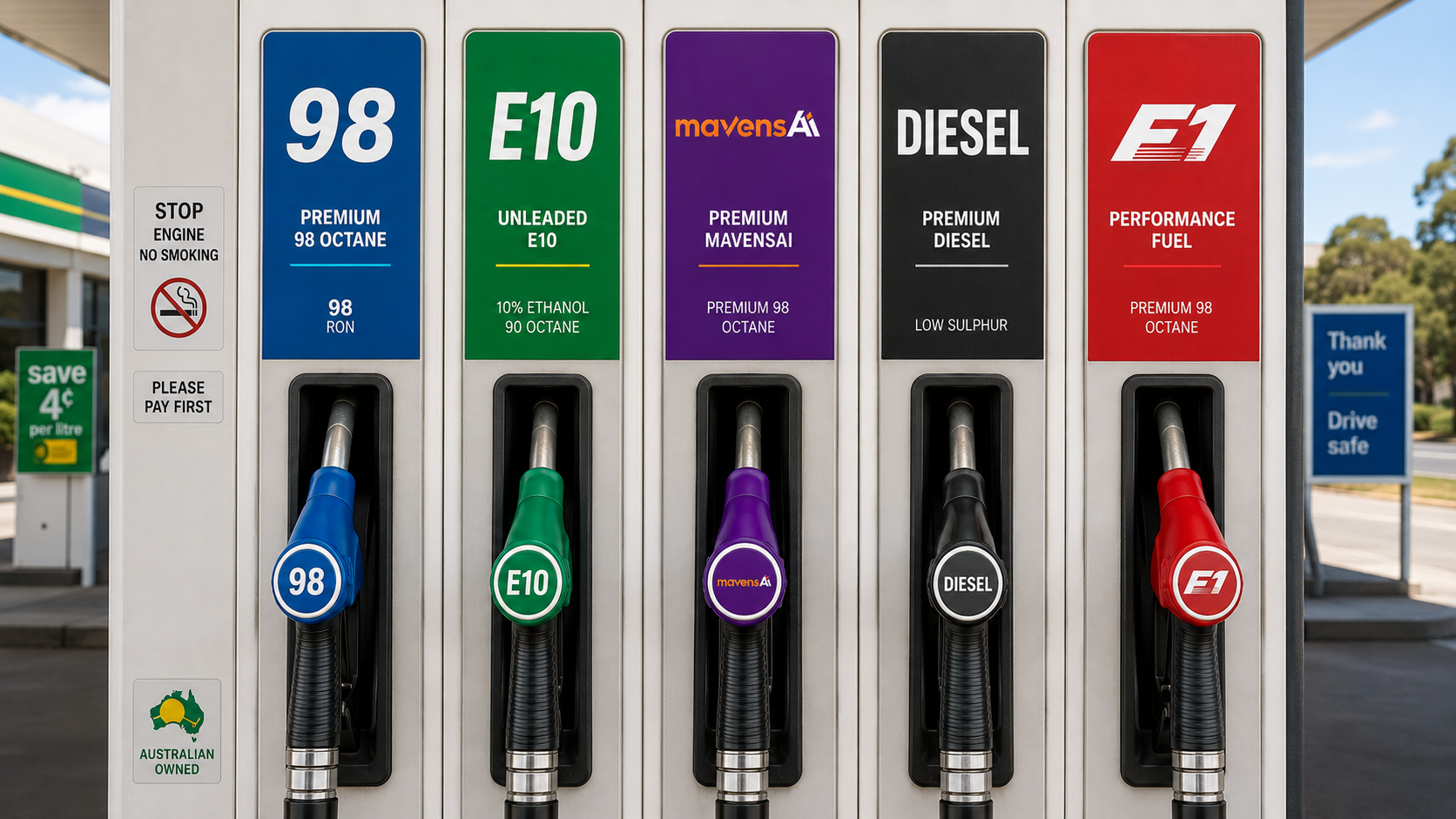
Every vehicle needs fuel. In AI, that fuel is tokens: chunks of text the model reads and writes. Every question you ask, every document you upload, and every word the AI generates back burns tokens. Long inputs cost more than short ones. Verbose answers cost more than brief ones.
The car analogy holds beautifully here. Bigger, more powerful engines drink more fuel, and they drink premium. Smaller, efficient engines sip the cheap stuff. Heavy cargo (long documents, big datasets) burns more fuel than a quick errand (a one-line question).

The price gap is bigger than most people realise. A query to a top-tier “thinking” engine like Claude Opus or GPT-5.5 Pro can cost roughly five times more per token than the same query to a lightweight model like Nano, Haiku or Gemini Flash. Run that across thousands of queries a day and the difference between the right engine and the wrong one is the difference between a manageable bill and a runaway one.
Two things drive costs up faster than people expect. The first is long inputs: uploading a 100-page PDF and asking “summarise this” costs more than most users realise, because the model reads every page before writing a word. The second is chatty back-and-forth: every follow-up question replays the whole conversation history, like reloading the same cargo for every trip.
Most business users won’t see this directly. You’ll pay a flat monthly subscription for ChatGPT, Claude, Gemini or Copilot, and the fuel costs are bundled in. But behind the scenes, that’s exactly what’s happening. It’s also why the same provider charges very different prices for their top-tier and lightweight models, and why “unlimited” plans usually have quiet caps on the premium engines once you push them hard enough.
The takeaway for business isn’t “use the cheapest engine”. It is run a fleet. Use the V12 for the hard reasoning jobs that actually need it. Use the V6 diesel workhorse for everyday work. Use the hatchback for high-volume jobs where speed and cost matter more than depth. The smartest organisations don’t pick a single AI. They match the engine to the journey.
The Cargo: Your Data
If the engine moves the vehicle and the fuel keeps it running, what is it actually carrying? Your data. Documents, emails, sales records, customer histories, internal knowledge, meeting notes. Every bit of context you feed the AI.

This is the part most businesses underestimate. AI doesn’t just carry cargo; it transforms it. It sorts emails into priorities. It compresses a 200-page contract into a one-page brief. It pulls insights out of customer feedback. It bundles raw data into recommendations.
In effect, AI is less a smart tool and more a logistics system for your data. The value isn’t the vehicle, it’s how efficiently you move, transform, and deliver the cargo.
And not all cargo is the same. Clean, structured cargo (spreadsheets, CRM records) sits neatly on a pallet, perfect for tools like Copilot for Excel. Messy unstructured cargo (PDFs, emails, meeting notes) is the mixed-box delivery van work, better suited to ChatGPT or Claude. Heavy or oversized cargo (long videos, huge datasets, full codebases) needs a specialist rig with a serious engine. kids from school. It works, but it’s wasteful, expensive, and not as efficient as the right tool for the job.
Cargo Security: Who Gets to Drive Your Data?
For any business handling sensitive information, this is the question that matters most: how protected is the cargo?
Enterprise vehicles like Microsoft 365 Copilot for Business, ChatGPT Enterprise, and Claude for Work are built like armoured trucks. Strong governance, data ringfenced inside your own environment, audit trails, compliance baked in. They’re slower to get moving, but the cargo is well protected.
The consumer versions of those same products (free tiers and standard paid tiers like ChatGPT Plus or Claude Pro) are a different vehicle entirely. More like a ute with no canopy: fast, capable, brilliant for most jobs, but you’d think twice before loading the tray with anything truly sensitive. Same brand, very different vehicle.

This is also where most businesses quietly get into trouble. An employee expenses $20 a month for ChatGPT Plus, starts pasting in customer data and internal documents, and the company has no visibility, no contract, and no protection. The cargo is moving on a personal vehicle the business doesn’t even know exists.
Three questions are worth asking before you load anything onto an AI:
- Where does it go? Does the data stay in Australia, or does it travel to US or other overseas servers? For regulated industries (legal, healthcare, finance, government) this is often non-negotiable.
- Who keeps a copy? Most enterprise tiers (ChatGPT Enterprise, Claude for Work, Microsoft 365 Copilot for Business) explicitly don’t use your data to train future models. Most free and consumer tiers have different rules. Make sure to read the fine print.
- What happens if it spills? What’s the provider’s track record on security, breaches, and retention? Cheap fuel doesn’t matter if the truck has no locks on the back doors.
This is also where open-source engines become genuinely interesting. Running a Llama or DeepSeek model in your own environment is the equivalent of keeping your trucks in your own depot. More work to maintain, but the cargo never leaves the yard.
The right answer for most businesses isn’t one vehicle or one approach. It’s a fleet, with the right vehicle assigned to the right cargo and the right job. Which raises a bigger question: how do you want to assemble that fleet?
Some businesses buy everything from one manufacturer. They pick Microsoft, or Google, or Anthropic, and run their entire AI capability inside that ecosystem. The advantage is consistency: one vendor, one contract, one support line, one governance model. The disadvantage is lock-in: you get whatever that manufacturer is best (and worst) at.
Others build their own fleet using a platform layer. Microsoft Foundry, Amazon Bedrock, and Google Enterprise Agent Platform all let businesses pick and choose engines from multiple providers (Claude, GPT, Llama, Mistral) and assemble their own custom vehicles on top. More flexibility, more work to manage.
Others again pick best-in-class for each job. Claude for writing, Perplexity for research, GitHub Copilot for code, Harvey for legal, Agentforce for sales. The advantage is excellence in each lane. The disadvantage is complexity: more contracts, more logins, more integrations to maintain.
There’s no single right answer. Whichever fleet model you choose, the bigger question is how the cargo flows through it.
Multi-Stop Journeys: AI is a Supply Chain
Real cargo rarely makes a single trip in a single vehicle. It moves through a logistics network: collected, sorted, transformed, delivered.
AI works the same way, and not just within a single team. Across a modern business, AI is now embedded into nearly every functional pillar, with specialist tools running each one:
- Personal productivity and office work: Microsoft 365 Copilot, Claude for Work, Google Gemini for Workspace
- Customer engagement and sales: Salesforce Agentforce, HubSpot AI, Zendesk AI, Gong AI
- Finance and treasury: HighRadius, BlackLine AI, AppZen
- ERP and back office: SAP Joule, Oracle AI, Microsoft Dynamics Copilot, Xero AI
- Manufacturing and supply chain: Siemens Industrial AI, Blue Yonder, C3 AI
- HR and people: Workday AI, SAP SuccessFactors AI
- Marketing: Klaviyo AI, MailChimp AI, Adobe Firefly, Canva Magic Studio
- Project management and team coordination: Atlassian Rovo, Linear AI, Asana AI, Monday AI
- Data and analytics: ThoughtSpot, Tableau AI, Microsoft Power BI Copilot
- Legal and compliance: Harvey, Spellbook, Ironclad AI
- Cybersecurity: Microsoft Security Copilot, CrowdStrike Charlotte AI, Darktrace
- Engineering and product: GitHub Copilot, Cursor, Linear AI
Each of these is its own vehicle, with its own engine, carrying its own cargo, optimised for its own job. None of them does everything. All of them do something specific better than a general-purpose tool would.
But here’s where most businesses get stuck. A real logistics network isn’t just trucks. It’s trucks plus warehouses. The cargo can’t only live inside the vehicle that picked it up, because then nothing else in the business can see it. The Salesforce truck ends up with a shed full of customer data that the SAP truck can’t read. The HR truck has a shed full of people data that the finance truck can’t access. Each AI ends up optimising its own corner of the business with one eye closed.

The fix is a central warehouse. One place where the cargo lives, where every vehicle drops off what it’s carrying and picks up what it needs. In practice this is what platforms like Amazon SageMaker Lakehouse, Snowflake, Databricks, Microsoft Fabric, and Salesforce Data Cloud are trying to be: the shared depot underneath the operational fleet, where data is stored once, indexed properly, and made available to whichever AI needs to reason over it.
This is what unlocks the real value of AI across an organisation. An AI that can only see sales data makes sales recommendations. An AI that can see sales data, support history, payment patterns, and contract terms together makes business recommendations. The warehouse is what turns a collection of clever tools into a coherent intelligence.
The businesses winning with AI right now aren’t the ones who picked the “best” tool. They’re the ones who designed how data flows through their organisation. Which vehicle picks it up. Where it gets stored. Where it gets transformed. Where it ends up delivered.
The implication is that “choosing an AI” is the wrong frame. The right frame is designing your AI logistics network: which vehicles handle which legs of the journey, where the warehouse sits, and how the cargo moves between them.
The Roads: Your Systems, Integrations, and Processes
Even with the right vehicle, the right cargo, and a well-stocked warehouse, none of it moves if the roads are broken.
The roads are the connective tissue of your business. The APIs that let one system talk to another. The integrations that let your CRM update your finance system. The workflow tools that pass cargo from one vehicle to the next without a human in the middle. The business processes that decide who picks up what, when, and where it goes.
Most businesses underestimate how much of their AI success depends on this layer. The vehicles get the attention. The roads quietly determine whether anything actually gets delivered. A great AI tool plugged into a business with poor integrations is like a Ferrari in a paddock. Beautiful, fast, capable, but going nowhere useful.
Three things tend to separate good AI roads from bad ones.
The first is integration. Can your AI tools actually talk to the systems where your data lives? If your sales AI can’t read your support tickets, your finance AI can’t see your contracts, and your HR AI can’t access your performance data, then each one is operating without the full picture. The cargo is stuck in the depot.
The second is automation. Once two systems can talk, can the cargo move between them without a human carrying it across? Modern automation platforms (Zapier, Make, Microsoft Power Automate, n8n) and agentic frameworks are increasingly the road network that connects AI vehicles to each other and to the rest of the business.
The third is process. Even with great integrations and automation, the business still needs to know who is responsible for what. Which decisions does the AI make on its own? Which ones get escalated? When does a human pick up the cargo from the AI? These aren’t technical questions. They’re operational ones, and they’re the difference between AI that helps the business and AI that creates new bottlenecks.
The businesses that get this right treat their roads as seriously as their vehicles. They invest in integration. They build automation. They redesign processes around what AI can now do, rather than bolting AI onto processes designed for humans.
The lesson is that you can’t just buy a faster car and expect to get there sooner. You also have to fix the roads.
Coming up next
So far, we’ve worked through the mechanics of running AI as a business capability. The engines that power it. The vehicles that put it in your hands. The fuel that keeps it moving. The cargo it carries. The warehouse where data lives. The roads that connect it all together.
If you take only one thing from this part of the series, it’s that the businesses winning with AI aren’t the ones with the most powerful tool. They’re the ones who designed how all of these layers work together.
But there’s still one element we haven’t talked about, and it’s the most important of all: the human behind the wheel. Even the most expensive fleet on the smoothest roads is wasted if the drivers don’t know what they’re doing.
In Part 3, we’ll look at the driver. We’ll also look at what happens when the cars start driving themselves, because agentic AI is changing the rules of the road faster than most businesses can keep up. And we’ll close with the road rules: the AI governance, ethics, and cultural questions that decide whether your fleet helps your business or quietly puts it at risk.
That’s where the strategic conversation actually lives.
Need more help with your AI?
If you need help with your AI strategy, implementing an AI Agent, or your AI governance policy, contact our chief for a brief chat.
Popping The Bonnet on AI (Part 1 in Series)
So, you’ve just come back from a meeting and everyone in it was chattering about AI. You’re hearing on the news about AI spinning up human DNA to help solve cancer, but then you’ve also asked your AI assistant to write you a work email response and it sounds bland, boring and overly salesy.
ChatGPT, Claude, Gemini, CoPilot, Perplexity, Sora 2, Deepseek, Qwen, and Mistral. What’s the difference between them all?
And why have all my software providers come up with their own versions by bolting AI onto their existing products. Think Salesforce AI, Hubspot AI, Zendesk AI, Klaviyo AI, MailChimp AI. Why do I need so many options? Can’t I just use one to do everything? Wouldn’t that be more artificially intelligent?
Here’s the problem: most people think of AI as a single thing. A category. A product, even. For some, it’s that chatbot their team started using. For others, it’s a vague, all-encompassing force intent on reshaping the world.
The truth is that “AI” today is not one thing. It’s an entire industry, with dozens of companies, hundreds of models, and thousands of products built on top of them. Each with different strengths, different costs, different designs, and different jobs they’re built to do. Lumping them together is a bit like applying the term “vehicle” to a Formula One car, a delivery van, and a forklift. Technically it’s accurate, but practically it’s useless.
So here’s a way to make sense of it all: stop thinking of AI as software, and start thinking of it as a vehicle. Engines, fuel, chassis, the whole lot. Because once you look at the AI landscape that way, almost everything that felt confusing starts to click: why some tools cost a fortune to run and others cost pennies, why a model that’s brilliant at one task falls flat at another, and why your Microsoft rep swears by Copilot while your developers are quietly using something else entirely. Just as there’s simply no one car that will suit every human, no matter what Tesla owners say, there’s no one AI to rule them all. Well, not yet anyway.
This is the first in a three-part series of AI for business leaders. In this piece, we’ll pop the bonnet on the engines that power AI and the vehicles that put them in your hands. In Part 2, we’ll look at the business realities: fuel costs, data, security, and how the smartest organisations run AI as a logistics network. In Part 3, we’ll get to the humans behind the wheel, what happens when the cars start driving themselves, and the rules of the road that keep the whole thing from becoming a demolition derby.
Let’s pop the bonnet.
The Engine: Where the Intelligence Comes From
At the heart of every AI tool sits an engine. This is what the industry calls a foundation model. The engine is the bit that actually thinks: it understands language, generates ideas, analyses data, writes code and even draws pictures.
Building one of these engines is brutally hard, brutally expensive, and brutally well funded. Which is why there are only a handful of genuine engine makers in the world. Three of them dominate the conversation (note: these car references are relative to the Australian car market):

- Google is the Toyota of the AI world: vast scale, and making engines for everything from city hatchbacks to fleet buses, and quietly powering half the integrations you already use.
- OpenAI is the Mercedes-Benz of the bunch: the household name, premium positioning, and the brand the average person actually recognises. Engines like the GPT-5 series power most of the AI you’ve probably used.
- Anthropic is the BMW of the industry: the engineer’s choice, obsessive about how the engine actually feels, with models like Claude Opus favoured for serious thinking jobs.
Then there are the open-source companies, who take a different approach entirely, giving their engines away free for anyone to download, modify and build on. Think of it as a car manufacturer publishing its engine blueprints so that home builders, workshops, and rival car makers can all tinker with them. This open-source approach has changed the industry, because it means you don’t have to rent an engine from OpenAI or Anthropic if you’d rather build your own.
Chinese companies have come to lead much of this space. Players like DeepSeek, Qwen, Kimi and others are doing to AI what BYD, Chery, and MG are doing to the Australian car market: arriving fast, undercutting on price, and quietly, and quickly, matching the performance of the established names. DeepSeek sent shockwaves through the industry by releasing models that rivalled the frontier engines at a fraction of the cost.
Rounding out the field are the boutique tuning houses. Mistral, the French outfit, builds elegant, efficient engines with a European sensibility, a bit like Peugeot or Citroen, while xAI, Elon Musk’s contribution to the space, makes Grok, which you can think of as the Tesla of AI: polarising, attention-grabbing, and unmistakably the work of its founder.
Here’s the catch most business buyers miss: with the big three, you don’t buy the engine. You rent access to it. They build it, they shape it, they decide how it behaves, and you drive it only in the ways that they allow. It’s a bit like leasing a Mercedes: you get a great car, but you can’t pop the bonnet and start modifying things.
Open-source engines like Llama and DeepSeek flip that on its head: free to take home, free to crack open, free to tune for your own industry. That distinction matters a lot if you care about data sovereignty (where your information lives and who can see it) or if you want a model that knows your specialism inside out.
Different Engines for Different Jobs
Just as some car companies make both V12s and economical four-cylinders, AI labs build a whole catalogue of engines. The trick is knowing which is which:
- Top-tier “thinking” engines: the flagships, like Claude Opus, GPT-5.5 Flagship, and Gemini Ultra in Deep Think mode. These are the V12 power units and Formula One drivetrains. Astonishing capability, expensive to run, ideal for the hard jobs that need careful reasoning.
- Workhorse engines: the mid-tier models, like Claude Sonnet, GPT-5.5 Standard, and Gemini Pro. The reliable petrol four-cylinder or V6 diesel used day-to-day by Australian drivers. Capable enough for almost any business task, and can handle most road types and conditions.
- Lightweight engines: the small, fast ones, like Claude Haiku, GPT Mini or Nano and Gemini Flash. Think Suzuki Swift or Mazda 2; nimble little hatchback engines. Quick, cheap, perfect for high-volume tasks where you don’t need to overthink anything.
- Specialist engines: purpose-built for one job. Veo and Runway are dedicated video engines. Midjourney and Flux are specialist image engines. They’re the marine engines and dragsters of the AI world: brilliant in their lane, useless outside it.
The lesson is simple: using the most powerful engine for every task is like driving a Ferrari to pick up the kids from school. It works, but it’s wasteful, expensive, and not as efficient as the right tool for the job.
The Vehicle: How AI Actually Reaches You
An engine on its own is unusable. Nobody drives an engine. You drive a car built around one. In AI, that car is the application: the interface, the controls, the safety features, the experience that turns raw intelligence into something a human can actually use.
This is the layer where most of the brand confusion lives, because the same engine often powers very different vehicles, designed with very different drivers in mind. They tend to fall into three groups.

Standalone vehicles you drive directly
These are the AI products you open up and use as their own thing. You go to them, log in, and start a conversation.
- ChatGPT is OpenAI’s flagship showroom car. Think Mercedes C-Class: the recognisable daily driver, premium but approachable, used by everyone from students to executives. Flexible, multi-purpose, the friendly all-rounder.
- Claude.ai is Anthropic’s own demo vehicle, showing off what their engines can really do. Think BMW 3 Series: the thinking driver’s choice, focused on substance over flash, favoured by writers, researchers and developers who care how it actually performs under load.
- Google Gemini is the Toyota Camry of the AI world: ubiquitous, reliable, and quietly built into half the things you already use, from Gmail to Google Docs to Android.
- Perplexity is the Subaru WRX of AI. Rally-bred for fact-finding and research, built for speed and precision when you need answers, not conversation.
Purpose-built work vehicles
These are AI products engineered for a specific job or industry. They might use the same engines as the standalone vehicles, but they’re wrapped in a chassis built for a particular kind of work.
- Microsoft Copilot is the Volvo ES90, the executive sedan of AI. Built around OpenAI engines, wrapped in corporate governance, audit trails, compliance features and “won’t do anything embarrassing in front of the board” guardrails. Designed for big organisations that need safety and integration above all.
- GitHub Copilot is a tradesman’s ute. Purpose-built for one job (writing code) and brilliant at it. Think Ford Ranger.
- Salesforce Agentforce is a branded delivery fleet, purpose-built for the Salesforce ecosystem. Like a fleet of Toyota HiAce vans that only run between Salesforce depots.
- Harvey AI is a Bentley parked out the front of a top-tier law firm. Engineered for one wealthy, regulated industry, with all the trim to match.
Bolt-on accessories and in-dash assistants
These aren’t new vehicles at all. They’re AI features added to software you already drive. The existing tool gets smarter without you having to buy something new.
- HubSpot AI, Zendesk AI, Klaviyo AI, MailChimp AI and dozens of others are factory-fitted accessories. Not new vehicles, but AI features bolted onto the marketing and customer service tools you already drive.
- Notion AI, Slack AI, Atlassian Intelligence are the in-dash assistants of the tools you’re already in. Smarter notes, smarter messages, smarter project boards, without asking you to learn a new system.
- Adobe Firefly, Canva Magic Studio, Grammarly are the built-in sat-navs of the creative world: AI quietly working alongside you while you keep using the software you’ve always used.
You’ll find the same engines under the bonnet in many cases, but wildly different vehicles around them, because each is built for a different journey.
Coming up next
If this is starting to make sense, you’ve already got a sharper mental model of the AI landscape than most people in the meetings you’re sitting in. You can spot the difference between an engine maker and a vehicle. You can tell when two products are running the same engine under different brands. You can match the engine to the job rather than driving a Ferrari to school pickup.
But understanding the vehicles is only the first step. The real questions for any business start once you decide to actually buy and run a fleet. What does it cost to keep these things on the road? Whose data are they carrying, and who else can see it? How do they connect to each other across your business?
That’s where Part 2 picks up. We’ll look at the fuel that powers AI, the cargo it carries, and how the smartest organisations are running their AI not as a collection of tools, but as a logistics network.
Need more help with your AI?
If you need help with your AI strategy, implementing an AI Agent, or your AI governance policy, contact our chief for a brief chat.